Cleaning Up an Overgrown Pond Bank: What Georgia Landowners Should Know
Home › Blog › Cleaning Up an Overgrown Pond Bank: What Georgia Landowners Should Know
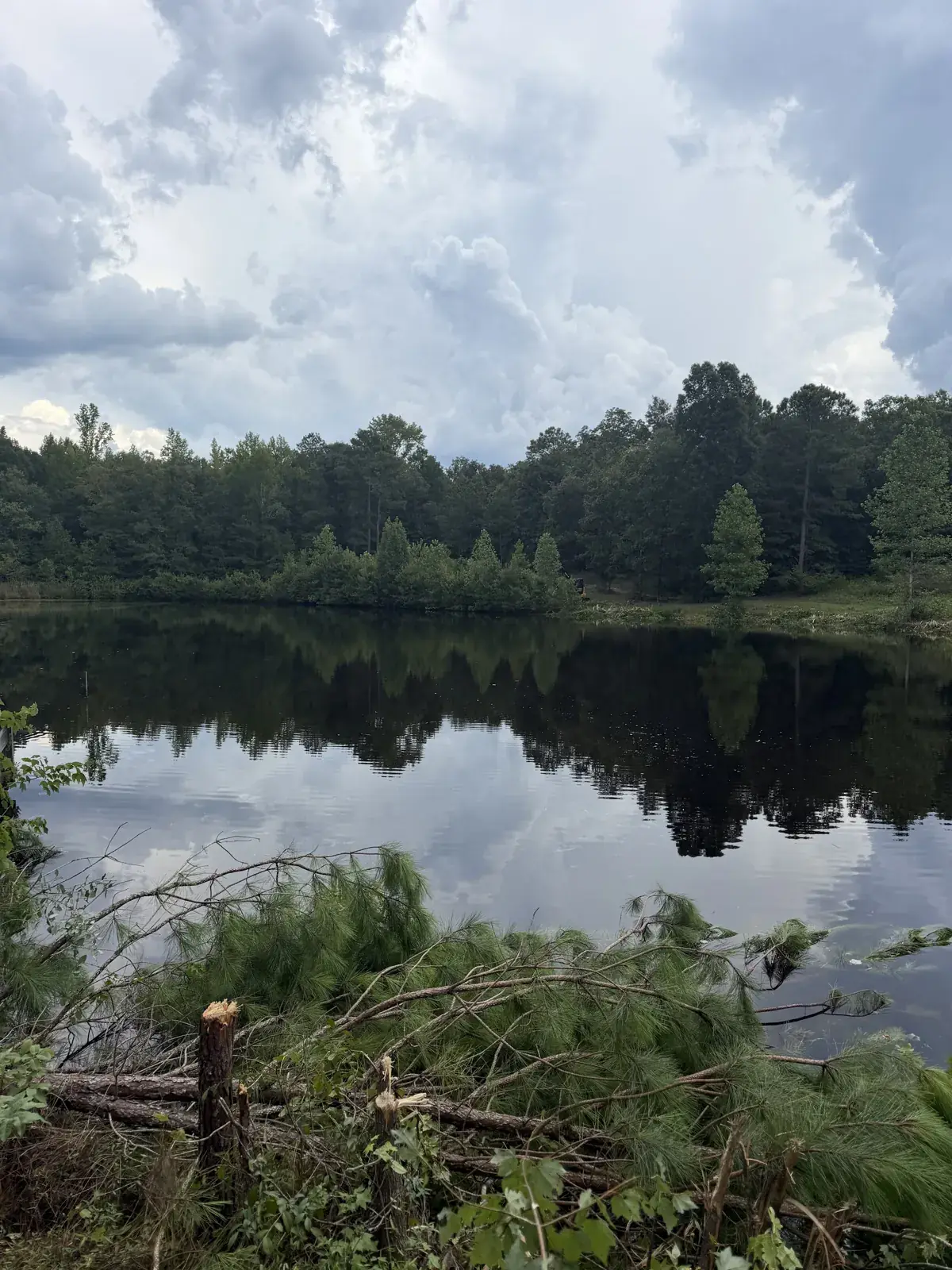
Ponds don’t disappear overnight. Here’s why the banks grow up, what a clean up involves and how to keep the water in view once it’s open.
How a pond disappears
A lot of properties in Middle Georgia have a farm pond, and a lot of those ponds have slowly vanished behind a wall of brush. It doesn’t happen overnight. A few saplings come up on the bank one year. The next year briars and vines fill in around them. A few more years go by, and the far side of the pond is gone from view and the path you used to walk around it is gone too.
Pond banks are just about the easiest place on a property for brush to take over. They stay damp, get plenty of sun and usually don’t get mowed because the ground is steep or soft. Left alone, they grow up faster than almost anywhere else on the land.
Why it’s worth cleaning up
The most obvious reason is that you can’t enjoy a pond you can’t see or reach. Fishing from the bank, letting the kids play near the water and just looking out at it from the porch all depend on keeping the edge open.
There are practical reasons too. Brush on the banks hides problems like erosion, washouts and animal burrows that are easier to fix when you can see them. Trees and woody growth on a pond dam are generally discouraged, because roots can create paths for water through the dam over time. And the longer growth is left, the bigger it gets. Saplings that could be cut in an afternoon turn into trees that take much longer to deal with.
What a pond bank clean up involves
A pond bank clean up focuses on the land around the water: the banks, the edges and the strip of ground between the pond and the rest of the property. The goal is to remove the brush, saplings, briars and vines that have taken over, while keeping any shade trees you want to save.
The tools depend on the ground. On flat, firm areas, a forestry mulcher can grind brush and small trees in place and leave a layer of mulch that protects the soil. On steep or soft banks, an excavator with a brush cutter can reach out from solid ground and cut growth without driving a heavy machine onto ground that can’t hold it. Many ponds need both.
Protecting the bank while you work
Ground near water can be soft, and banks can be steep, so every pond should be looked at in person before the work is planned. A careful contractor will figure out where machines can safely travel, where they need to reach in from above, and how to leave the bank in good shape.
The aim is a clean edge that holds up, not torn up ground that washes into the pond with the next heavy rain. Mulch left on the bank helps hold the soil while grass and ground cover come back.
Keeping it open afterward
Once a pond bank is cleaned up, keeping it that way is much easier than the first clean up. Regular mowing or trimming where the ground allows, plus a periodic pass to knock back saplings before they get big, will keep the water in view for years.
If you plan to use the pond more, think about what you want around it while the work is being planned. A path down to the water, a cleared spot for a dock or bench, or stumps ground out of the area where people will walk can all be handled at the same time.
Getting started
If your pond has grown up and you’re in Crawford, Peach, Houston, Bibb, Monroe or Taylor County, we can help. We’ll come out, walk the pond with you, and give you a price for the whole job. Take a look at our pond clean up service page or call us to set up a time.
Ready to get your land back?
Tell us about your property and what you want it to be. We’ll come take a look.
Get an Estimate