Forestry Mulching vs. Traditional Land Clearing: Which Fits Your Property?
Home › Blog › Forestry Mulching vs. Traditional Land Clearing: Which Fits Your Property?
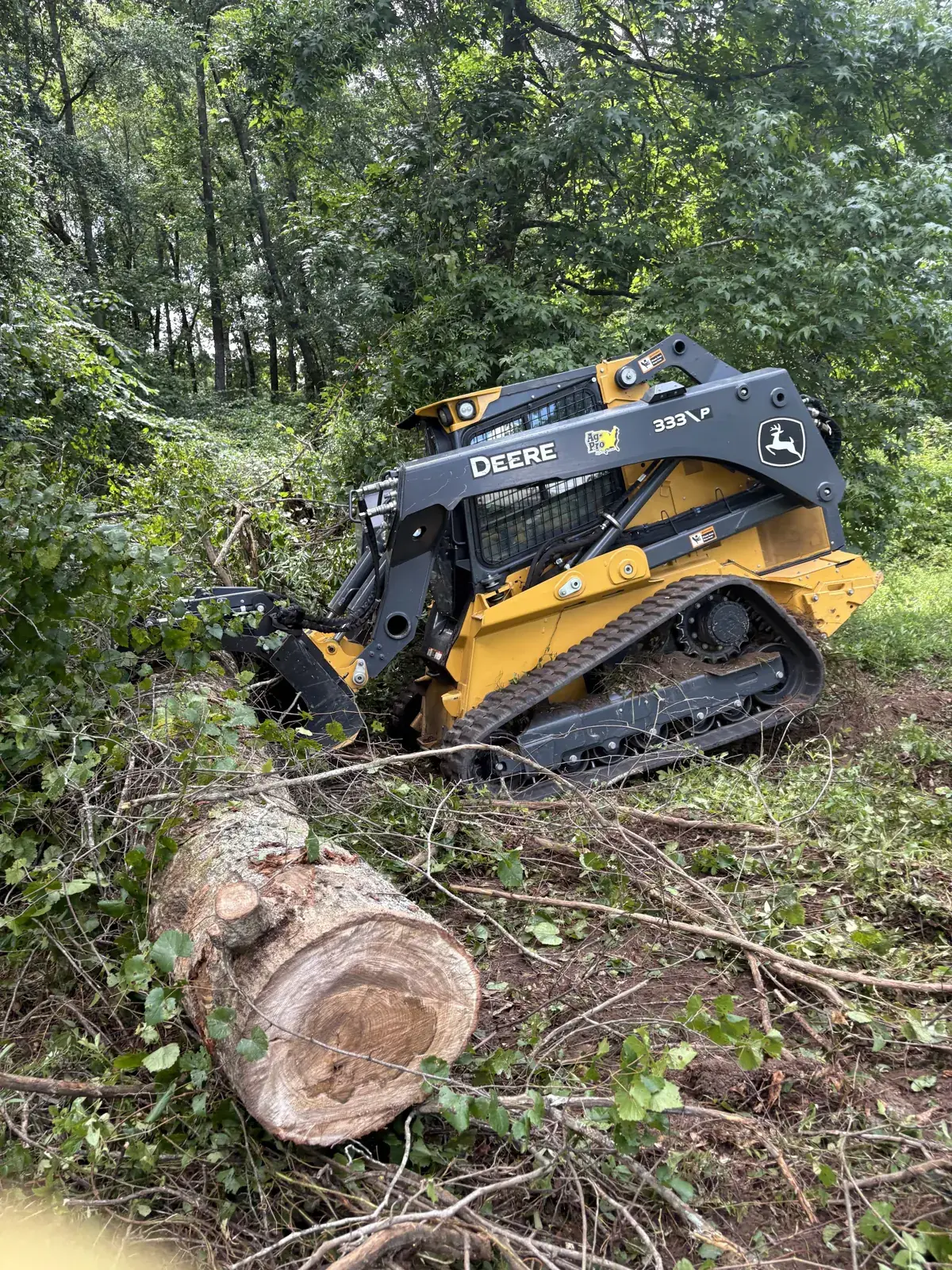
Mulching and dozer clearing both open up land, but they leave it in very different shape. Here’s how to tell which one your property needs.
Two ways to open up land
If you own a piece of property in Middle Georgia, there’s a good chance some of it has gotten away from you. Maybe it’s the back half of the lot, a tree line that keeps creeping into the pasture or a stretch of woods so thick you can’t walk through it. When it’s time to take that ground back, most people end up choosing between two approaches: forestry mulching and traditional land clearing.
Both will open up the land. But they work very differently, cost different amounts in time and cleanup, and leave your property in very different shape. Knowing the difference helps you ask for the right thing when you call a contractor.
How traditional clearing works
Traditional clearing usually means a bulldozer or a large excavator pushing over trees and brush, often roots and all. Everything gets pushed into long piles called windrows. Then those piles have to be dealt with, usually by burning them or loading them up and hauling them off.
This approach makes sense when you need bare dirt: a house pad, a road bed, a field you plan to plow, or a big commercial site. It removes nearly everything, including stumps and root systems. The trade-off is that it takes more equipment, more days and more cleanup. It also tends to scrape off topsoil, leaving bare ground that can wash badly in a hard Georgia rain until something grows back.
How forestry mulching works
Forestry mulching uses one machine, usually a compact track loader like the John Deere 333P we run, fitted with a mulching head. The head is a heavy rotating drum with teeth that grinds brush, briars, vines and small trees right where they stand. What’s left is a layer of mulch spread across the ground.
There are no piles to burn and nothing to haul. The cutting and the cleanup happen at the same time. The mulch layer shades the soil, holds moisture and slows erosion, then breaks down over time as grass and ground cover come back through it. It’s also selective. You can keep the oaks and pines you like and clear out everything growing underneath.
When mulching is the better fit
Mulching tends to be the better choice when you want to use and enjoy the land, not turn it into bare dirt. Common examples include:
Thinning out underbrush in wooded acreage so you can walk it, hunt it or see through it. Clearing an overgrown house lot or back yard. Opening up trails, shooting lanes or a path down to a pond. Pushing a pasture edge or fence line back to where it used to be. Cleaning up land you just bought so you can see what you’ve got before you make bigger plans.
In all of those cases, mulching gets the job done faster, with less disturbance and a property that looks finished the day the machine leaves.
When you need something heavier
There are times when mulching isn’t the right tool. If you’re building a house and need a clean, stump-free pad, the ground will need more work than mulching alone. Very large trees and very large tracts may need a bigger operation with a dozer. And if you need stumps completely gone so you can mow a lawn, stump grinding can follow the mulching in the spots where it matters.
A good contractor should tell you honestly which approach your property needs, even if it’s not the one they sell. At K3 Land Management, our equipment is built for small and mid-size properties, and if your job really calls for a bulldozer, we’ll say so.
Start with a walk-through
The easiest way to decide is to have someone walk the property with you. Point out what you want to keep, what needs to go and what you want to use the land for when the work is done. That conversation usually makes the answer obvious.
If you’re in Crawford, Peach, Houston, Bibb, Monroe or Taylor County, we’ll come out and look at your property in person before giving you a price. Read more about our forestry mulching service, or give us a call to set up a time.
Ready to get your land back?
Tell us about your property and what you want it to be. We’ll come take a look.
Get an Estimate